By: Ford Wilder
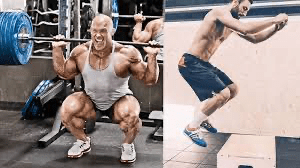
The first question you may be wondering is, what is contrast training? Contrast training is pairing a heavy strength movement with a high-velocity, explosive exercise. For example, I might do a heavy squat set and then follow it with a set of box jumps or short sprints. The idea is to use the heavy lift to activate my nervous system, then immediately jump into the activated state to improve power and speed through the explosive plyometric or speed movement. As an athlete, the weight room should not be used for just strength purposes. It should be used to become faster, get more explosive, jump higher, and be a better overall athlete. Training for pure gains and aesthetics will lead to injuries within one’s sport. Also, lifting for only strength will cause one to develop stiff and inflexible muscles. Lacking the necessary fast-twitch fibers and coordination that you need to be a great athlete.
I began contrast training at the beginning of my junior year. I knew it was necessary because of the heavy workload of playing a big role in three different sports throughout the year. I also knew I was going to have to make athletic plays on the court and field. Which would be hard to do if I stuck to my old training habits. As the year went along, I stayed in great shape, got stronger, and did not overly fatigue myself with this new way of training. Contrast training elevated my performance on the football field, basketball court, and track.
Many people believe the main goal in the weight room while in season is to maintain strength without becoming fatigued. I believed this until I began contrast training myself. Through this method, I become faster, stronger, and more explosive throughout the whole course of the year while still being able to perform to my capabilities in game. This allowed me to peak during the postseason of each sport. I played some of my best games/track meets near the end of each season.
Ultimately, I believe once an athlete becomes comfortable and trusts this way of training, they will see their performance skyrocket. Being an athlete is not just about doing sport-specific work. Putting in work in the weight room is where athletes separate themselves from the average. Contrast training is the new and improved best enhancer for athletes

 Baron Media Network