Why In-Season Lifting is Crucial?

By: Ford Wilder

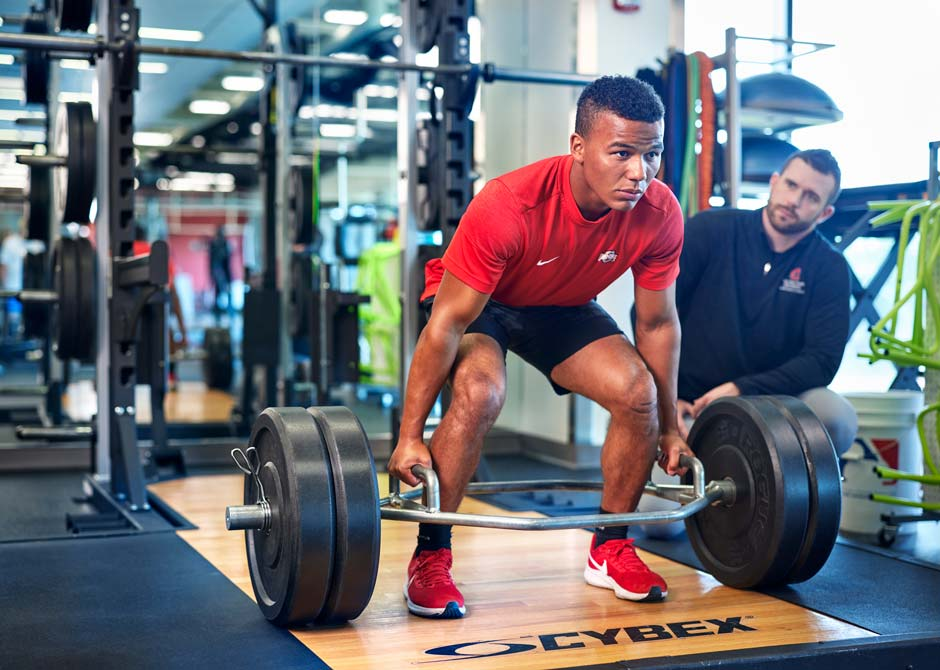
In-season training is crucial for athletes to maintain their strength and speed across a season without diminishing their performance. Along with this, a crucial point many athletes fail to realize is that they can actually continue to get stronger and faster through a season if they train properly and at the correct times and frequencies. Most only think they should train intensely in the off-season, and once a season starts, they can just stop lifting. This is so far from the truth, and there is a reason why all pro athletes lift to some capacity during their season. I am a huge fan of in-season lifting, and I lift throughout my entire year whether I am in football, basketball, or track season. I tailor my training based on how many games I am playing and how my body feels so I do not overtrain or fatigue myself.

A main benefit of in-season lifting is better recovery and load management. Controlled strength training enhances circulation and mobility, which helps muscles recover faster from practices/games. I have noticed that my body has been able to recover at much quicker rates and feels great by the time I play football games on Friday nights. By lifting just two to three times a week, with two being the most efficient, I am not only able to get stronger and faster, but I am also able to withstand big hits and prevent nagging injuries from occurring. My body has a much greater tolerance for impact.

A second crucial benefit is long-term athletic development. While you may not get as strong or as fast as you would in off-season training, and the results may not come as quickly. In-season training gradually builds up, and you will peak in performance near the back half of your season when it counts by simply just lifting heavy two times a week. One upper body and one lower body lift per week will do it. I have stuck to this method the past year, and I have seen my body peak during the playoffs, and the work has paid off.

Ultimately, in-season training is a must-do for athletes, and you are missing out if you do not take advantage of this method. It is not about doing the most; it’s about doing what’s smart and sustainable. Consistency, even in small doses, can separate good athletes from great ones over time. If you want to stay competitive, durable, and perform at your best when it matters most, in-season lifting should be a non-negotiable part of your routine.
Why Contrast Training is Beneficial for Athletes

By: Ford Wilder

The first question you may be wondering is, what is contrast training? Contrast training is pairing a heavy strength movement with a high-velocity, explosive exercise. For example, I might do a heavy squat set and then follow it with a set of box jumps or short sprints. The idea is to use the heavy lift to activate my nervous system, then immediately jump into the activated state to improve power and speed through the explosive plyometric or speed movement. As an athlete, the weight room should not be used for just strength purposes. It should be used to become faster, get more explosive, jump higher, and be a better overall athlete. Training for pure gains and aesthetics will lead to injuries within one’s sport. Also, lifting for only strength will cause one to develop stiff and inflexible muscles. Lacking the necessary fast-twitch fibers and coordination that you need to be a great athlete. 

I began contrast training at the beginning of my junior year. I knew it was necessary because of the heavy workload of playing a big role in three different sports throughout the year. I also knew I was going to have to make athletic plays on the court and field. Which would be hard to do if I stuck to my old training habits. As the year went along, I stayed in great shape, got stronger, and did not overly fatigue myself with this new way of training. Contrast training elevated my performance on the football field, basketball court, and track.

Many people believe the main goal in the weight room while in season is to maintain strength without becoming fatigued. I believed this until I began contrast training myself. Through this method, I become faster, stronger, and more explosive throughout the whole course of the year while still being able to perform to my capabilities in game. This allowed me to peak during the postseason of each sport. I played some of my best games/track meets near the end of each season.

Ultimately, I believe once an athlete becomes comfortable and trusts this way of training, they will see their performance skyrocket. Being an athlete is not just about doing sport-specific work. Putting in work in the weight room is where athletes separate themselves from the average. Contrast training is the new and improved best enhancer for athletes

The Best Way to Structure a Workout

By: Ford Wilder

You can structure your workout in many ways, whether you are a bodybuilder or an athlete. You can do one exercise at a time or superset exercises to be more efficient and quicker with your workout. It is important to note that many factors play into what may be the best way to structure a person’s workout. I believe supersetting workouts with at least 2 different exercises per superset is the best way to build a workout plan. I also believe you should have 3 or 4 supersets per workout and here is why. 

By having 3 or 4 supersets per workout, you can fit in a heavy workload in quick time.

If you do not superset and focus on one exercise at a time then your workout can last almost double the time than if you were to superset. Bodybuilders typically do not superset, so they can focus on the muscle group(s) they are targeting while athletes will superset their workouts, so they can become the best athletes they can be in the quickest amount of time possible. Focusing on one exercise at a time will allow for better muscle growth ,but not everyone has an hour and thirty minutes to work out each day. Also, supersetting allows people to only have to work out 3 or 4 times a week while those who go the bodybuilder route have to work out six to seven times a week to effectively hit each muscle group. I believe that fitting in the most work possible in the fewest amount of workouts possible is the best possible route.

Another important factor is deciding what muscle groups to pair with each other. I believe pairing muscle groups with one another in a workout is the greatest way to become as fit as possible. An example of pairing muscle groups would be lifting weights for your back and biceps. Instead of doing a separate workout for each, you can combine them into one workout by supersetting, which would allow you to only have to do one workout instead of two.I superset all my workouts and I have seen great results in performance and muscle growth. I can get in and out of the weight room very quickly and get adequate work in. 

Additionally, making sure to fit in compound lifts, band work, and core work all in a workout is extremely important. I have noticed having a variety of exercises is the most efficient way to build muscle and grow in performance. Also, having an array of workouts limits fatigue while being able to put in great work. Pairing weighted lifts with banded lifts allows for muscle growth and explosiveness which ensures why you should make sure to use different types of exercises throughout a workout.

Ultimately, I am a firm believer that people should always have a workout structure that benefits them and fits their schedule. Without a proper workout structure, a person can not see the results in an effective way. I believe all people should sit down and create a workout structure and plan ,so they can benefit from it.

Why Lifting Weights is Necessary for Athletes

By: Ford Wilder

To begin, there are numerous reasons why all athletes should utilize the weight room to some extent. Using the weight room could be that extra push an athlete needs to be great instead of just good. Many athletes overlook lifting weights and only work on skill work and practice of their sport or sports. I am here to tell you why that may be setting them back, and how the weight room is vital to athletes.

The first of many reasons is the most important one which is increased strength. By lifting weights and getting stronger, one’s sports performance will continue to rise. This is because an increased output in power allows athletes to become faster, quicker, more agile, and have more force and stability in their upper and lower body. Not only will you have a higher force output, but by lifting weights you will also cause hypertrophy, increasing the size of your muscle fibers. Not only will you get stronger and more athletic by lifting weights, but you will also become more toned and look the part. Balance the weights with a well-balanced diet and you will see the great benefits to come with your athletic abilities and performance.

Next off, weight lifting also is vital to injury prevention. While some injuries are inevitable, the latest research suggests that resistance weight training can assist heavily in preventing musculoskeletal injuries. This is because by lifting weights with the correct form and targeting the right muscle groups you can increase stability and support in your body. By utilizing the weight room athletes can prevent injuries and also get rid of them by strengthening the surrounding ligaments and muscles around the affected area.

Lastly, lifting weights is very beneficial for one’s mental state. Many studies show regular weight training can boost one’s mood and decrease anxiety. This is because lifting weights and exercising releases endorphins which play a major role in having a good mood. Also, lifting weights can improve brain health because studies show that resistance training can increase neuroprotective factors. One of these factors is the expression of brain-derived neurotrophic factor which is linked to learning and memory.

To summarize, many athletes overlook the importance of weight training and how it can enhance performance. This is why athletes should begin a weightlifting program and pay attention to the benefits that come with it.   

Creating the Perfect Upper-Body Workout 

By: Luke Pedersen

When it comes to creating a good upper body workout, there are a few key things to keep in mind. Here’s a step-by-step guide to help you out. Start by warming up your body with some light cardio exercises, like jogging or jumping jacks. This helps increase blood flow to your muscles and prepares them for the workout ahead.

Target all major muscle groups: A good upper body workout should include exercises that target your chest, back, shoulders, and arms. Some examples include push-ups, pull-ups, shoulder presses, and bicep curls. Vary your exercises to keep your workout interesting and challenge your muscles, try incorporating different variations of each exercise. For example, you can do the bench press or cable flys to exercise your upper chest/middle chest.

Don’t forget about rest: It’s important to give your muscles time to recover and grow stronger. Make sure to schedule rest days in between your upper body workouts to allow your muscles to repair and rebuild.

It’s always a good idea to consult with a fitness professional or trainer to create a personalized workout plan that suits your specific goals and fitness level. And always listen to your body and adjust the intensity and frequency of your workouts as intended.