Why In-Season Lifting is Crucial?

By: Ford Wilder

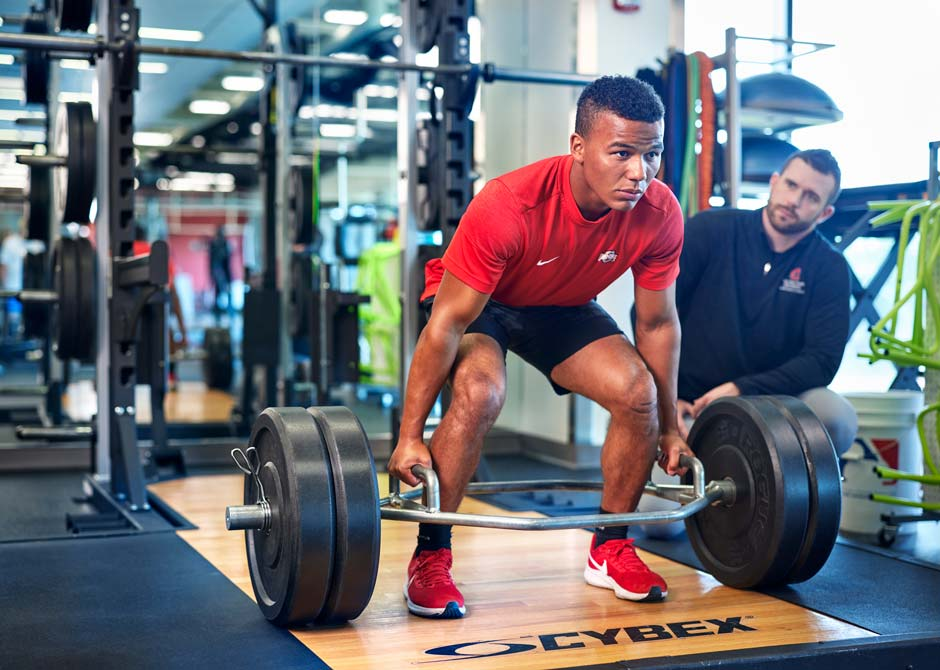
In-season training is crucial for athletes to maintain their strength and speed across a season without diminishing their performance. Along with this, a crucial point many athletes fail to realize is that they can actually continue to get stronger and faster through a season if they train properly and at the correct times and frequencies. Most only think they should train intensely in the off-season, and once a season starts, they can just stop lifting. This is so far from the truth, and there is a reason why all pro athletes lift to some capacity during their season. I am a huge fan of in-season lifting, and I lift throughout my entire year whether I am in football, basketball, or track season. I tailor my training based on how many games I am playing and how my body feels so I do not overtrain or fatigue myself.

A main benefit of in-season lifting is better recovery and load management. Controlled strength training enhances circulation and mobility, which helps muscles recover faster from practices/games. I have noticed that my body has been able to recover at much quicker rates and feels great by the time I play football games on Friday nights. By lifting just two to three times a week, with two being the most efficient, I am not only able to get stronger and faster, but I am also able to withstand big hits and prevent nagging injuries from occurring. My body has a much greater tolerance for impact.

A second crucial benefit is long-term athletic development. While you may not get as strong or as fast as you would in off-season training, and the results may not come as quickly. In-season training gradually builds up, and you will peak in performance near the back half of your season when it counts by simply just lifting heavy two times a week. One upper body and one lower body lift per week will do it. I have stuck to this method the past year, and I have seen my body peak during the playoffs, and the work has paid off.

Ultimately, in-season training is a must-do for athletes, and you are missing out if you do not take advantage of this method. It is not about doing the most; it’s about doing what’s smart and sustainable. Consistency, even in small doses, can separate good athletes from great ones over time. If you want to stay competitive, durable, and perform at your best when it matters most, in-season lifting should be a non-negotiable part of your routine.

The Benefit of a Athlete Doing Plyometrics 

By: Andrew Howle

To begin with, many people have little to no knowledge about plyometrics in sports and the vast benefits the exercises reap. The training consists of particularly jump training that advocates for explosiveness on the field. The training involves the rapid extension and contraction of the muscle that helps make quick movements on the sports field. The exercises are very helpful in sports such as football, track, tennis, soccer, and basketball. Many athletes typically start with basic exercise like pogo jumps and acceleration sprints.

I do the jump exercises to build my explosiveness in football and track. The movements are very useful and helpful in football when breaking down to make a tackle. It teaches you to chop your feet and pop the person in front of you using the drive from your whole body. Many people typically try to ankle bite, diving low on someone to tackle rather than rolling their hips into someone, extending their entire body into them. This helps prevent major injuries by having the correct tackling form on the field.

Also, I use the exercises to train my strides on track. This is beneficial when kicking out of blocks in races like the one-hundred-meter and two-hundred-meter dash. It teaches you to propel your body out, which helps you get a better start to the race. I also like to use plyometrics when jumping, especially during long jumps. It helps extend my leg muscles in mid-air, allowing me to land a farther jump in the sandpit. There are plenty more events in which this exercise could be helpful, such as hurdles, high jump, and triple jump. It is a great way to improve your athletic ability in your sport of choice. I highly recommend plyometrics to track athletes specifically.  

To conclude, many athletes should bite the bullet and do plyometrics. It may seem dumb or strenuous at first. However, it is worth it for the athlete to take it seriously while training. I’m optimistic that it will improve their performance in the given sport. All the athlete has to do is give the training a chance, and they will reap the benefits.  

Body Weight Training Versus Heavy Weight

By: Andrew Howle

To achieve fitness, one can engage in two primary training methods: heavy and bodyweight training. Heavy weight training involves the use of physical, tangible tools to enhance body strength, while bodyweight training leverages one’s own body weight against gravity to build muscle strength. Both training methods offer numerous benefits, and a balanced incorporation of both into your workout routine is key. This balance reassures individuals that they are making the right choices for their fitness journey. 

Heavyweight typically involves leaving your home to go to a gym. This is because many people need adequate training tools at home. In addition, gym equipment is expensive to buy for a house. This is different from bodyweight training because you can train your body weight at home without any cost. A person can achieve the ideal physique using either type of training. I like heavyweight training the most because it is instrumental in playing football. It does not bother me going to the gym daily to train to achieve my goals. I try to work in an average amount of body weight training into my usual workout plan per week. A few heavyweight exercises are loaded bench press, squatting, and deadlift. To compare, a few bodyweight exercises are pull-ups, sit-ups, and push-ups. These different types of workout training plans can achieve any goal. It is just the preference of the person. The general environment for heavy weight training is usually in a gym surrounded by unknown people. It is a great way to meet new people that have a common interest in working out. Training bodyweight can be done at home in the peace of your home. This is more appealing to some people that are not very social.

To conclude, a person can train using either type of workout plan and still achieve success. This success can be in the form of improved strength, endurance, muscle tone, or overall health. However, I recommend heavy heavyweight training to become stronger at many olympic lifts.

Which is better Athlete Lifting or Hypertrophy Weight Lifting

By: Ford Wilder

To start, there are many types of weightlifting which have different focuses.

The main two are athlete training and hypertrophy aka bodybuilding training. Hypertrophy training focuses on improving the physical appearance of one’s body, while athlete lifting focuses on improving a person’s physical abilities. I believe that athlete training is better and here is why.

First, many athletes don’t receive the correct guidance and lift in the best way possible. This is because they either did not listen to their school’s strength coach on whats best, or they don’t realize they should be training for athletic abilities and not just their appearance. I fell victim to this before I understood the importance of training like an athlete. I did athletic lifts my school strength coach had us do and I listened to him. But outside of school lifts, I found myself at the local gym lifting purely for aesthetics(appearance). I firmly believe in going the athlete lifting route because I saw the changes in my athletic performance once I started to train like athletes are meant to. Not only that but my physical appearance even got a lot better. I would more than likely be more filled out if I kept training for appearance, but I would not have gotten any more athletic.

Next off, I also think that training to become more athletic is more enjoyable than bodybuilding. I can do many more dynamic movements that include plyometrics, med ball slams, sprints, etc. By doing this my body is a lot more flexible and my range of motion and explosiveness continue to increase unlike those who train for aesthetics. Hypertrophy weightlifting consists of many isolated movements where a person is sitting down in almost every exercise. This is because it allows for a greater stretch and isolation of the muscle which will allow for muscle fibers to more efficiently tear and grow back bigger. But by doing this I noticed I was a lot stiffer, and my athletic movements were about as fluids. This is why athletes should stick to training for abilities and not appearance. Also, many people believe you do not build muscle unless you lift for hypertrophy. This is completely false. Athlete training consists of many exercises to build muscle and become more explosive at the same time. I saw the results myself being on an athlete-based training program. I built plenty of muscle all the while becoming more athletic.

Ultimately, if you are an athlete I do not think it is even a question of whether a person should hypertrophy or athlete train. The benefits of athlete lifting far outweigh those of hypertrophy training. I believe lifting in the correct style can make or break an athlete’s performance.